Chapter Four: Simple Compositions
4.2 Vertical Composition
The choice of vertical composition often depends on the subject being photographed. Generally, elongated subjects are best conveyed through a vertical frame—most notably single buildings. Additionally, close-up portraits may also benefit from this orientation to enhance visual tension.
When to Employ Vertical Composition
The decision to use vertical composition is closely tied to the subject’s form. By convention, "vertical" refers to aspect ratios such as 2:3 or 3:4. Beyond buildings and portraits, vertical framing is equally effective for trees, potted plants, or narrow spaces with deep perspective. Moreover, when using telephoto lenses—whose optical characteristics tend to flatten spatial depth—the vertical format can help evoke a sense of depth through the proportional relationships between elements within the frame.
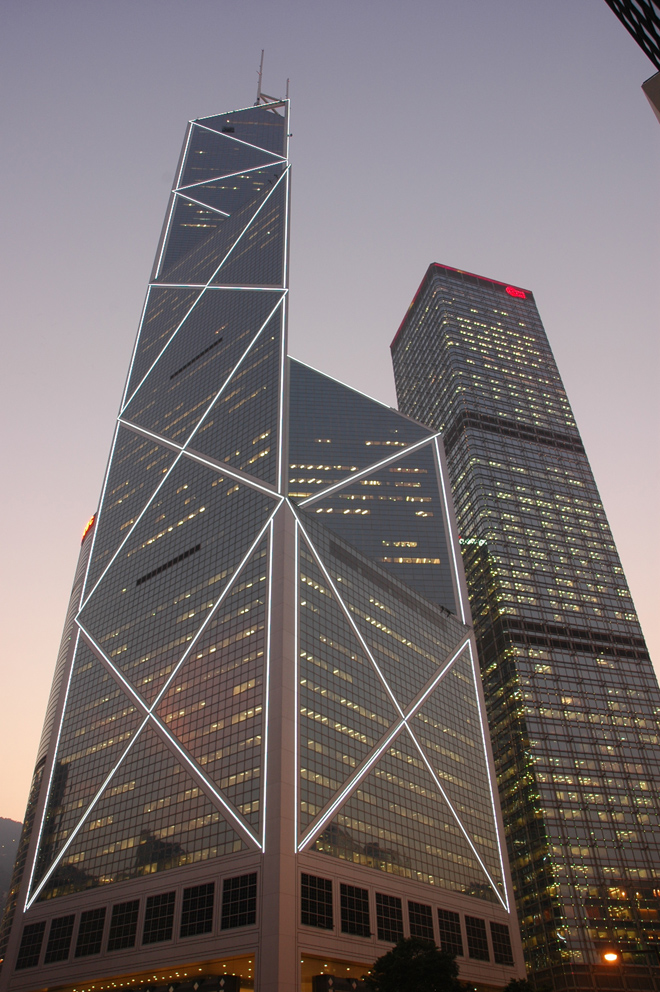
◄ At dusk, the illuminated façade of a building glows like ripples of swordlight. The Bank of China Tower, with its sharp angular lines and dramatic lighting, is particularly well-suited to vertical composition. In fact, most architectural scenes lend themselves beautifully to this orientation.Nikon D70 & AF-S 18-70mm Nikkor f/3.5-4.5G ED
Vertical Grip
Some high-end cameras feature built-in shutter controls for both vertical and horizontal orientations. Mid-range models, however, may require an optional vertical grip—offering not only extended battery life but also improved handling and stability. This accessory proves especially useful when rapid composition is needed in challenging or dynamic shooting conditions.
Some photographers believe that a vertical grip enhances balance and weight distribution, lending greater control during extended shooting. Yet it must be acknowledged that adding a grip increases the camera’s overall weight, which may become an inconvenience during prolonged use or travel.
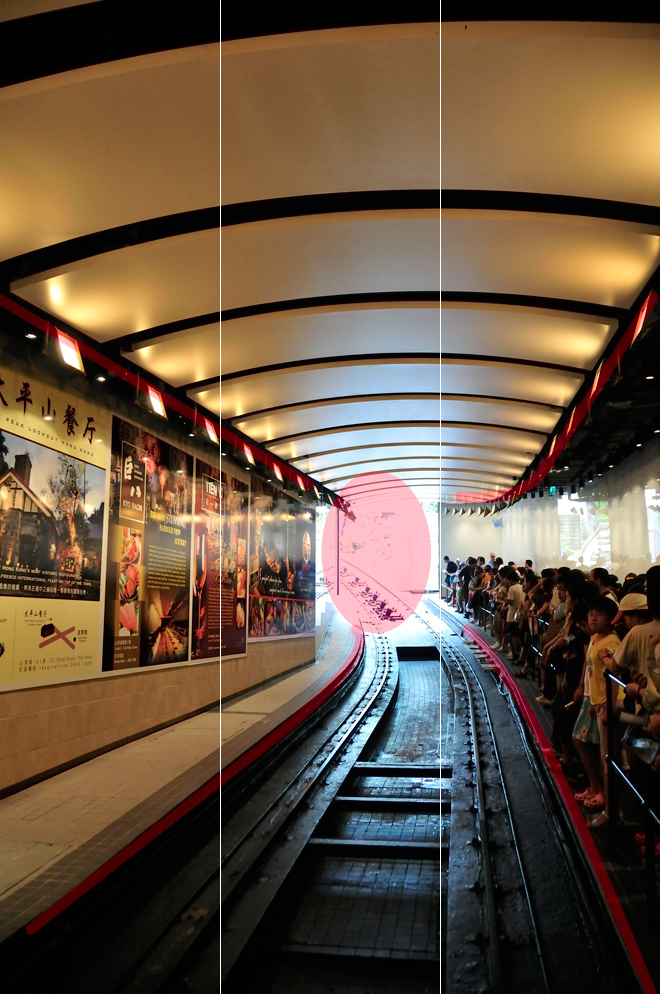
► To reach Victoria Peak in Hong Kong, one may choose the bus or cable car. Over recent years, I have grown accustomed to joining long queues for the cable car—though waiting times range from fifteen to twenty minutes, it offers a welcome escape from winding mountain roads. For me, riding the cable car always evokes the quiet romance of a foreign holiday.
Returning to this familiar scene, I found myself once again compelled to photograph the environment. Previously, my focus had been on light patterns cast above the track and the sense of elongated movement suggested by the rails below. This time, however, I intentionally included the crowd waiting in line—not as a distraction, but as an essential narrative element. Employing vertical composition and the rule of thirds, I arranged visual elements to guide the eye through a layered experience. Though no sweeping curves exist in this frame, the parallel alignment of human figures, rails, and the rightmost walkway creates a subtle yet powerful sense of linear progression. The same scene, transformed by different compositional intent and slight shifts in angle—this is the quiet magic of photography.Nikon D300 & AF-S VR Zoom-Nikkor 18-200mm f/3.5-5.6 G ED DX
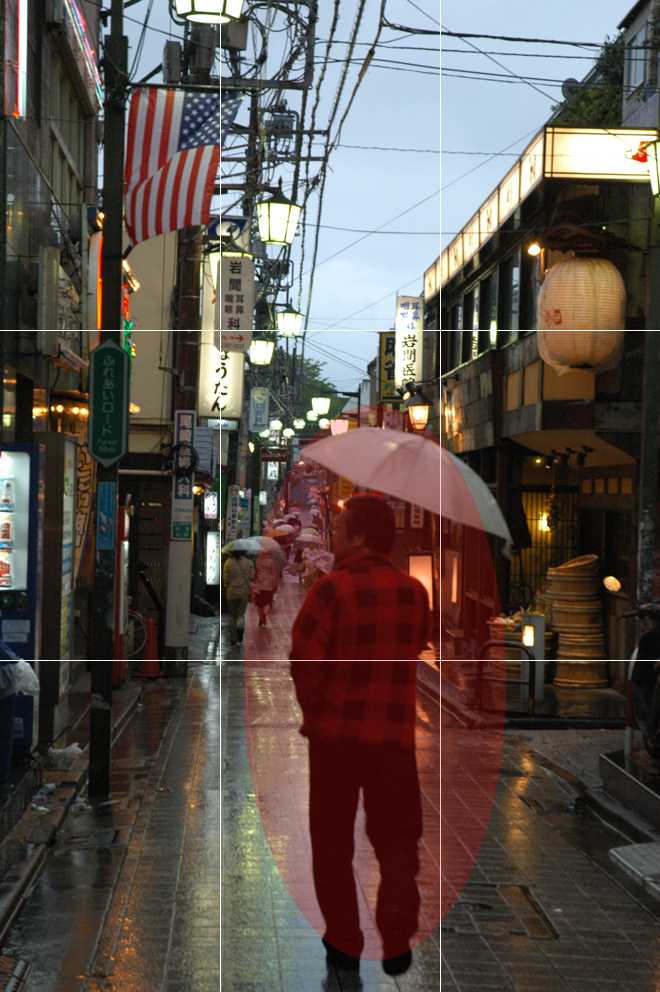
◄ Departing from the guesthouse Tōyō-ya in Nakano, I set out for a dinner reservation at a renowned yakiniku restaurant in Shinjuku. Nakano bustles with life, and near the JR station lies a stretch of shops reminiscent of a Chinese district—offering everything from food and clothing to lodging, all within easy reach. Just one stop away lies the vibrant heart of Shinjuku.
That evening, a cool breeze carried light drizzle through the air. As I stepped out to catch the train, this scene caught my eye—evoking a line from Zheng Chouyu’s poem *The Error*: “Like the stone-paved street at dusk.” I paused beneath my umbrella, withdrew my camera from inside my coat, and swiftly composed this image using vertical framing. How often a fleeting moment stirs the soul—and how fortunate to carry one’s camera, ready to capture such quiet epiphanies.Nikon D70 & AF-S 18-70mm Nikkor f/3.5-4.5G ED